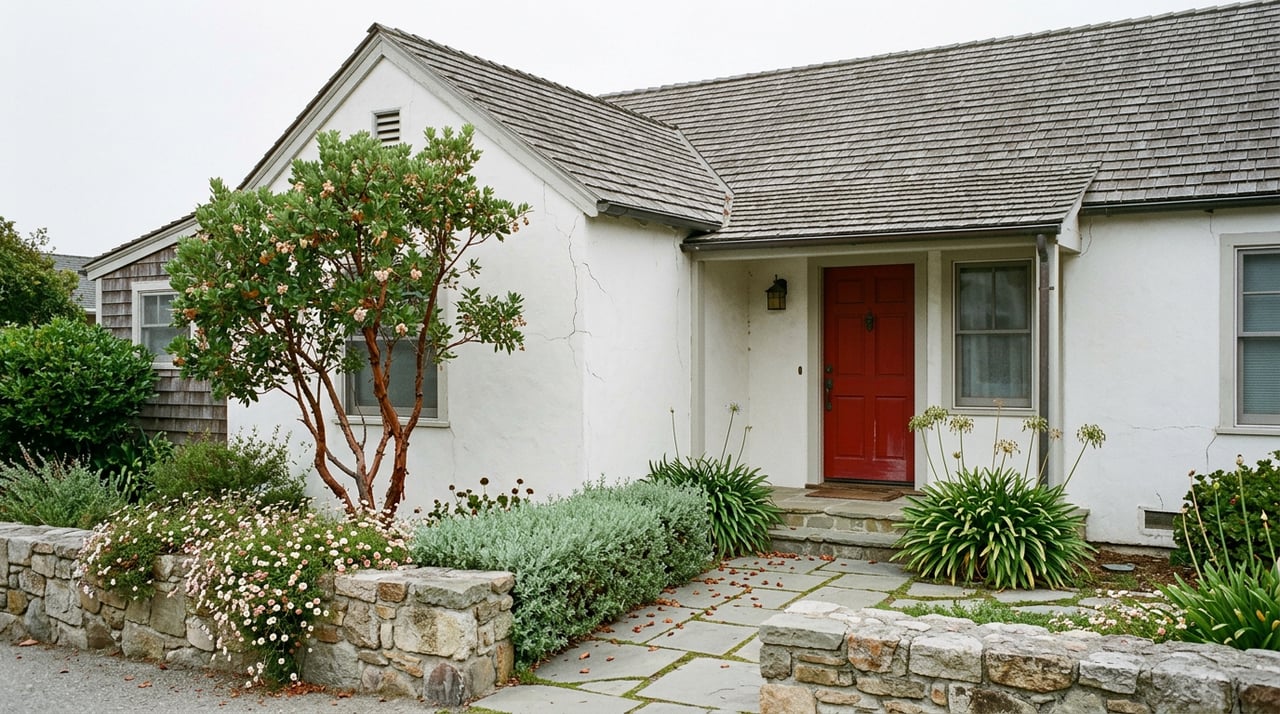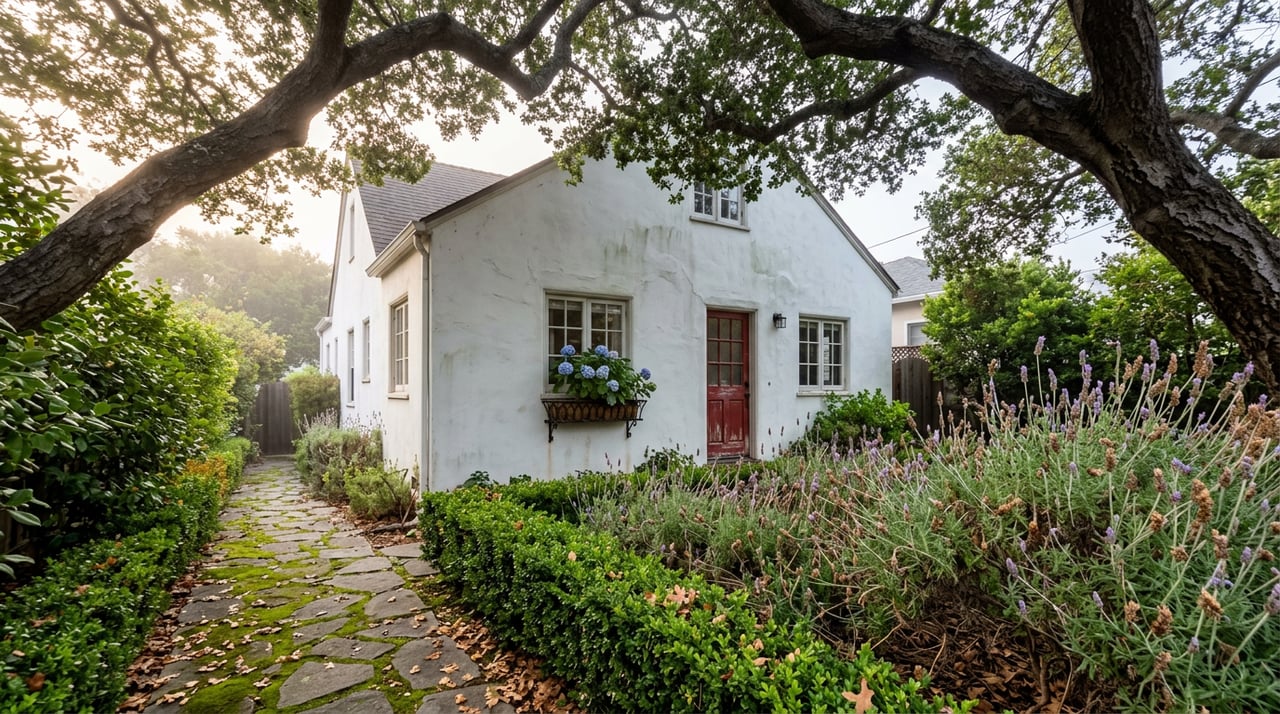
A listing that says 4,000 square feet in Carmel-by-the-Sea is not making a promise about what you can put on that lot. It is describing a boundary line on a parcel map. What actually gets built inside that line depends on something the listing sheet never mentions: how many inches of trunk diameter are standing on it, and how long ago the last one came down.
This matters more in Carmel than almost anywhere else on the Peninsula because the village runs its own forestry code alongside its zoning code, and the two do not always point in the same direction. A buyer comparing a cottage lot in the Golden Rectangle against a larger parcel in Hatton Fields or Carmel Woods is not just comparing square footage and price. They are comparing two different relationships to the same ordinance, and that ordinance can add months, or subtract buildable footprint, in ways the county assessor's numbers never capture.
The Rule That Changes the Moment You Pick Up a Hammer
Carmel's tree ordinance treats a healthy oak, cypress, pine, or redwood as protected once it reaches six inches in trunk diameter. Any other species crosses that line at ten inches. Outside of construction, those are the numbers that decide whether you need a permit to remove a tree from your own yard.
The moment a construction or remodel permit enters the picture, the threshold drops hard. Under the city's code compliance guidance, any tree two inches or larger on an active construction site requires a removal permit, and the same two-inch rule applies to roots. A tree that sat quietly on your property for decades, well under the radar, becomes a permitting question the day you pull a building permit.
There is a second layer that catches buyers who think they can get ahead of it. Carmel's municipal code presumes that if a tree comes down and remodeling, rebuilding, or new construction begins within six months, the tree was removed to clear the way for that project. That presumption pulls the removal back under the same review the city would have required if you had asked permission first. You cannot clear a lot in April and file for a permit in August and expect the tree to have been a separate, unrelated decision in the eyes of the Forest and Beach Commission.
Layered on top of the tree rules is the Forest Character overlay itself, which restricts construction within the root zone, or drip line, of protected trees unless an arborist signs off on protection measures. A mature canopy does not just sit next to your buildable envelope. It can sit inside it.
What a 40-by-100 Lot in the Golden Rectangle Actually Gives You
The Golden Rectangle, the blocks framed by Ocean Avenue, Scenic Road, Santa Lucia, and San Carlos, is built on a grid of lots that typically run 40 feet by 100 feet, close to 4,000 square feet total. Cottages here tend to land around 1,600 square feet, often with a one-car garage and an upstairs level that catches an ocean glimpse the ground floor doesn't get.
On a lot that size, a single mature Monterey pine or coast live oak near the center of the parcel is not a landscaping detail. It can define where the buildable footprint sits relative to setbacks, and it can be the reason a straightforward remodel turns into a design review conversation about root protection zones and where the foundation is allowed to go.
Why Carmel Point and Hatton Fields Are a Different Negotiation
Carmel Point sits just south of the Golden Rectangle, partly within city limits and partly in unincorporated Monterey County, which means some of its parcels answer to county review rather than the city's design guidelines. Its lots are also less uniform. County parcel examples along Scenic Road include sites of 4,650 and 7,175 square feet, well above the village-core standard, though Scenic Road carries its own 18-foot height limit to protect coastal views.
Hatton Fields and Carmel Woods trade the walk-to-Ocean-Avenue convenience for flatter terrain and larger parcels, the kind of lots where a buyer planning an addition or a second structure has more room to work around a protected tree rather than through it. More land does not eliminate the tree ordinance. It just gives a project more places to land that don't require an arborist's blessing.
The lot size on the map tells you what you own. The canopy tells you what you can touch.
The Teardown That Shows the Math in Practice
A house completed by Dyar Architecture and featured as Forbes' House of the Week in January 2026 is a useful real-world case. The project sits two blocks from the beach in an area where homes trade in the five to fifteen million dollar range, and it was built on a 40-by-100 lot, the same narrow footprint that defines much of the village core.
The design had to work through Carmel's design review process, which allows neighbors to weigh in, and roof height became a central point of debate because the plan depended on two stories to work at all. The solution was to partially embed the lower level rather than fight the height limit outright, a workaround that preserved the two-story program without triggering the objections a taller roofline would have invited. It is a clean illustration of how the ordinance shapes the architecture long before it shapes the price. Even with a generous budget and an experienced local architect, the lot's dimensions and the review process still set the terms.
What This Means Before You Write an Offer
Two lots priced similarly per square foot are not equivalent purchases in Carmel if one carries a mature protected canopy and the other doesn't. Before comparing price per square foot across submarkets, it is worth finding out what is actually standing on each parcel and how close it sits to where you would want to build. A buyer with renovation plans should ask for the tree inventory, understand which species and diameters are protected, and build the design review timeline, generally two to six months according to local building guides, into the closing and construction schedule rather than treating it as a formality at the end.
None of this makes Carmel's smaller lots a poor choice. A cottage on a tight Golden Rectangle parcel with no significant canopy can be simpler to build on than a larger lot in Carmel Woods with three protected oaks positioned across the buildable area. The lot size on the listing is a starting point for that conversation, not the answer to it.
Frequently Asked Questions
Does every tree removal in Carmel-by-the-Sea require a permit? No. Outside of construction, a permit is required once an oak, cypress, pine, or redwood reaches six inches in diameter, or once any other species reaches ten inches. Dead or broken limbs can generally be removed without a permit.
Does that threshold change if I'm remodeling or building new? Yes, significantly. On an active construction site, any tree or root two inches or larger requires a removal permit, a much lower bar than the six or ten inch thresholds that apply otherwise.
Can I remove a tree before I apply for my building permit to avoid the review? Not cleanly. City code presumes that a tree removed within six months of the start of remodeling, rebuilding, or new construction was removed for that project, which pulls it back under the same review process.
How long should I budget for design review in Carmel-by-the-Sea? Local building guides put the range at two to six months, depending on whether the project qualifies for administrative review or needs to go before the Planning Commission.
Why doesn't Carmel-by-the-Sea use street addresses like other cities? The village has never assigned standard street addresses to residential parcels, and mail is picked up at the post office rather than delivered to homes, a tradition that shapes how properties are described in listings and permits alike.
If you are comparing lots across Carmel's submarkets and want a clearer read on what a specific parcel's canopy and setbacks would actually allow, Susan Clark has spent more than three decades working through exactly these questions with buyers and sellers across the village. Reach out to request your VIP listing consultation before you make an offer that assumes more buildable space than the lot can deliver.