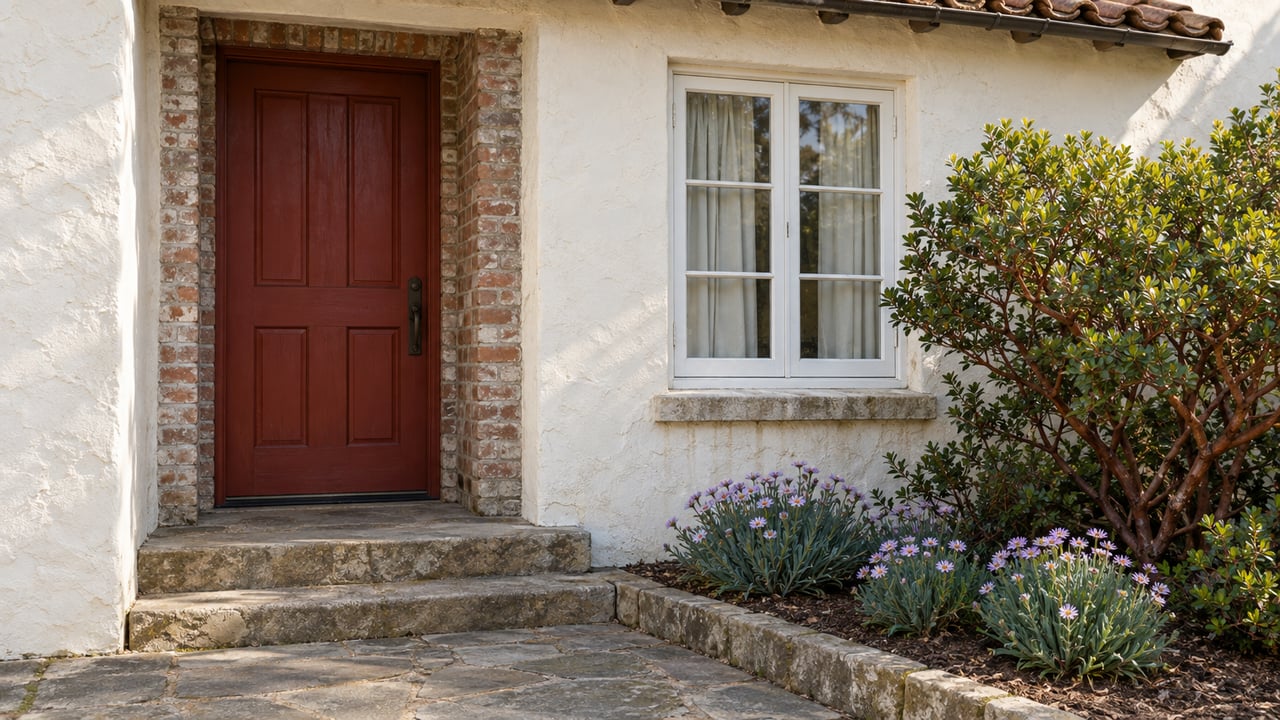
Pull up the county tax history on the right listing in Old Town Monterey and you'll hit a number that looks like a mistake. A three-bedroom adobe a few blocks off Pacific Street, priced well into seven figures, carrying an annual property tax bill that reads like it belongs to a home half the size and half the price. Buyers who've been watching Old Town's numbers climb, the neighborhood's median sale price sat near $1.46 million as of May 2026, up close to 20 percent from a year earlier, tend to assume the county assessor missed something.
Understanding what a Mills Act contract does matters more than the tax line itself if you're comparing an Old Town adobe against anything else on the Peninsula.
A Contract, Not a Discount
The California Office of Historic Preservation describes the Mills Act as a California program, on the books since the 1970s, that lets cities and counties sign long-term agreements with owners of qualified historic properties. In exchange for committing to preserve and maintain the building's historic character, the owner gets their property reassessed using an alternate formula that typically produces a lower tax bill than a standard market-based assessment would.
That part is statewide. What makes it local is that every city runs its own program. In Monterey, eligibility isn't automatic just because a house looks old. The property has to sit within the city's H-2 City Historic Resource Overlay zoning designation. The city's own code spells out that H-2 zoning exists specifically to identify buildings the city has decided are worth stewarding, in exchange for a defined package of incentives that includes Mills Act eligibility.
So the tax line on that listing isn't a discount somebody forgot to remove.
The Math That Ignores What the House Just Sold For
Here's the part that actually explains the gap between the tax bill and the market. The county assessor isn't allowed to consider comparable sales data when valuing it. Instead, the assessed value comes from capitalizing the property's theoretical rental income, essentially treating an owner-occupied historic home as if it were an income property, projecting what it could rent for, subtracting allowed expenses, and dividing by a capitalization rate to arrive at an assessed value.
That's a fundamentally different question than "what did the house next door sell for." It's why a Mills Act adobe's tax bill can sit nearly flat in a year when Old Town's median sale price jumps 19.7 percent. The two numbers aren't disagreeing with each other. They're answering different questions, and only one of them moves with the market you're watching on a listing sheet.
For a buyer comparing Old Town against other Peninsula neighborhoods, this matters beyond curiosity. It means the tax bill on a Mills Act home tells you almost nothing about what the house is actually worth today. Treat it as a separate, contract-driven number, not a signal about resale value or negotiating room.
The Contract's Terms
A Mills Act contract runs a minimum ten-year term, and it renews automatically each year on its anniversary, which keeps rolling the remaining term back out to ten years unless the owner or the city files a notice of nonrenewal.
Those obligations are real. Under Monterey's H-2 overlay, exterior work on a historic resource generally needs to go through the Historic Preservation Commission, with review against the Secretary of the Interior's Standards for Rehabilitation. Owners typically submit an annual accounting of maintenance and preservation work as part of staying in compliance. None of this is unusual by the standards of historic districts, but it's a meaningfully different ownership experience than buying a standard resale and repainting the trim whatever color you like.
Old Town's character makes this concrete rather than abstract. The neighborhood sits along Monterey's two-mile Path of History, which threads past 55 documented historic sites, among them Cooper-Molera Adobe, run today as a museum within Monterey State Historic Park rather than as a private residence. That's a public building, not a home you'd find in escrow. But the Old Town Neighborhood Association's own historic homes walk documents a separate category entirely: privately owned landmark homes throughout the neighborhood, several of which the association notes were eligible for the Mills Act, exactly the kind of house that shows up for sale with a tax bill that doesn't match its price tag. It's the same block, the same architectural language, but a different legal category of building than the museum adobes tourists photograph on their way to Fisherman's Wharf.
Before You Read That Tax Bill as a Bargain
If you're looking at a listing with a Mills Act contract attached, a few questions are worth answering before you factor that low number into your budget:
- Is the contract currently active, or has a notice of nonrenewal already been filed by the owner or the city?
- What's the contract's anniversary date, and how much of the current ten-year term is left before the next automatic rolling renewal?
- Has the Historic Preservation Commission approved, or is it currently reviewing, any exterior changes on the property, including ones the seller may have started and not finished?
- What does the property's most recent annual maintenance report to the city actually cover, and does it match what you can see in person?
- Does the parcel sit fully within the H-2 overlay boundary, or only partially, which can affect what future work requires commission review?
Your agent or a real estate attorney can pull the actual contract from Monterey's Community Development Department. Reading it before you write an offer helps you understand its terms.
A Few Straight Answers
Can I remodel the interior however I want? The specifics still depend on what's written into the individual contract for that property.
Does every old-looking home in Old Town qualify for this? No. The property has to sit within Monterey's H-2 City Historic Resource Overlay zoning before the city will even consider a Mills Act application.
Old Town's mix of storybook adobes and steady price growth makes it one of the more interesting corners of the Peninsula to buy into right now, but a low tax bill on a listing there is a clue about a contract, not a verdict on value. If you're weighing an Old Town adobe against other Monterey Peninsula neighborhoods and want someone to actually pull the Mills Act paperwork with you, Susan Clark has spent decades reading exactly this kind of fine print for buyers on this stretch of coast. Request Your VIP Listing Consultation to start with the contract, not just the comps.
This article is general information, not legal, tax or financial advice. Consult a qualified professional about your situation.