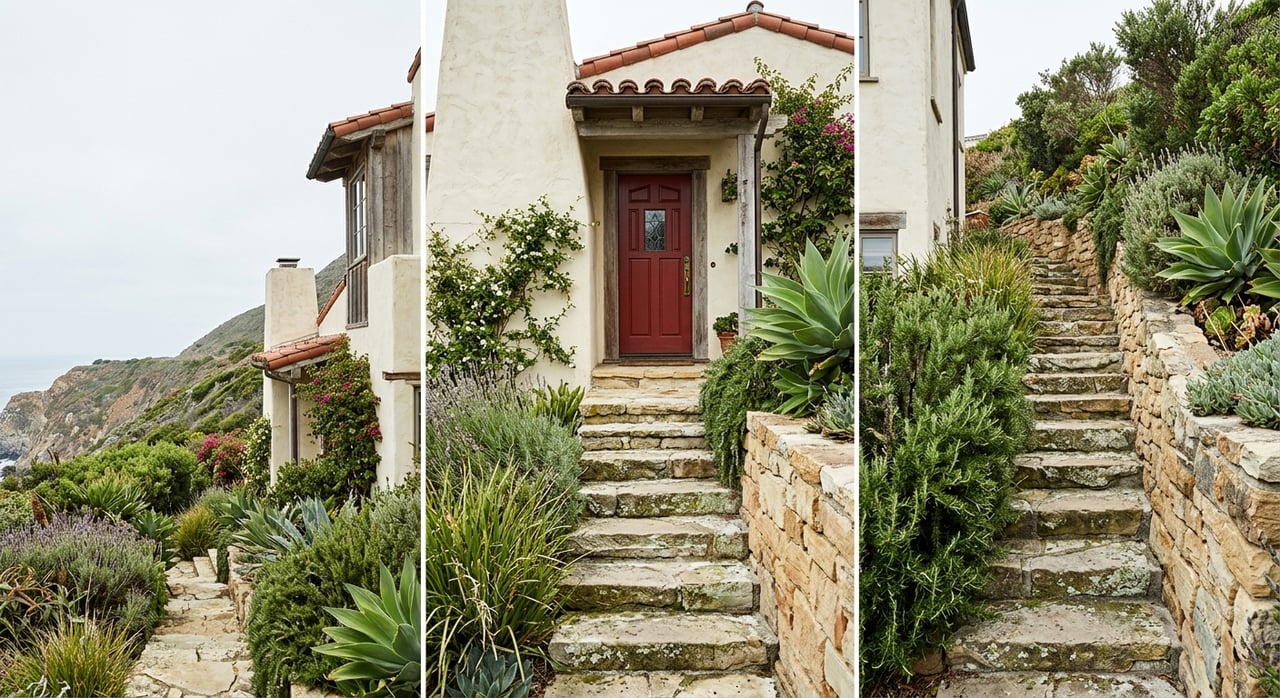
Buying in Carmel Highlands is not like buying in a typical neighborhood with neat blocks and predictable lots. Here, your decision is shaped by coastline, topography, access, and the realities of owning property in a scenic coastal setting. If you are considering a home in Carmel Highlands, understanding those details early can help you buy with more confidence and fewer surprises. Let’s dive in.
Carmel Highlands has a distinct setting
Carmel Highlands is best understood as a scenic coastal enclave rather than a conventional neighborhood. Monterey County describes it as a residential area on both sides of Highway 1 between Point Lobos Reserve and Malpaso Creek, with parcels generally ranging from one-half to one acre.
That setting creates a very different buying experience from what you may find in more grid-based communities. Roads can be narrow, steep, and winding, and the area is already largely built out. For you as a buyer, that often means evaluating each property on its own site conditions, access, and parcel features rather than comparing a long list of similar homes.
Housing choices are limited and highly individual
The housing pattern in Carmel Highlands is shaped by low density and limited remaining buildable land. County planning documents note that the broader Carmel area is dominated by single-family residences, and Carmel Highlands remains the most rural and lowest-density of the main subdivided areas.
Because of that, inventory can feel more one-of-a-kind. You may find that your search is less about choosing between similar floor plans and more about deciding which combination of view, privacy, road access, lot shape, and condition best fits your goals.
Steep slopes and shallow soils also limit future residential development in the area. That matters because scarcity can support long-term appeal, but it also means you should look closely at the practical details of any parcel you are considering.
Coastal climate shapes daily life
One of the biggest draws of Carmel Highlands is the ocean-moderated climate. Nearby Monterey climate normals show an annual mean temperature of 55.9°F, with summer highs mostly in the 60s and winter highs generally in the upper 50s to low 60s.
In everyday terms, that means you can expect a mild coastal environment rather than hot summers or severe winters. Point Lobos State Natural Reserve also notes that this stretch of coast typically has fair sunny days, occasional winter rains, dry summers, and fog from July through September.
That fog is not just part of the view. It can affect visibility, morning conditions, and the way a home ages over time. If you are buying here, it is smart to pay attention to moisture exposure, exterior materials, roof condition, and how the property handles the marine layer.
Access is simple on paper, but important in practice
Highway 1 is the main access route for the Carmel coast. Monterey County notes that traffic south of the Carmel River is largely recreational and that congestion and limited road capacity are major concerns.
That does not mean access is unworkable, but it does mean you should think about your routine. If you plan to use the home full time, part time, or as a second home, consider drive times, road conditions, and how comfortable you are with winding coastal roads.
It is also helpful to know that Carmel Highlands has ready access to commercial services in the City of Carmel and at the mouth of Carmel Valley. So while the area feels secluded, your daily essentials are generally found nearby rather than within the enclave itself.
Lifestyle here centers on the coast
For many buyers, the appeal of Carmel Highlands is as much about lifestyle as it is about the home itself. Point Lobos is just to the north and is known for sightseeing, photography, nature study, picnicking, hiking, scuba diving, and jogging.
That proximity helps define the experience of living here. You are buying into a coastal setting where scenery, outdoor access, and a quieter residential pattern are central to the value.
At the same time, Carmel Highlands is not built around large commercial centers or urban convenience. County planning documents indicate that commercial uses in the area are limited and mostly visitor-serving at the periphery. If that balance of privacy and access appeals to you, the location can be especially compelling.
Permits and design review matter
Before you buy, it is important to understand that Carmel Highlands falls within Monterey County’s coastal design-control framework. In this area, exterior changes, additions, decks, fences, and new structures can require Design Approval.
Within the coastal zone, use permits are handled as Coastal Development Permits. That can affect your plans if you hope to remodel, expand, change exterior features, or develop a vacant parcel.
This is one of the most important reasons to ask detailed pre-closing questions. If a home seems perfect but your long-term vision includes major changes, you will want to understand what may be possible before you commit.
Geology and slope conditions deserve close review
Site conditions are a major part of buying in Carmel Highlands. The Carmel Area Land Use Plan requires geotechnical reports in high-hazard areas and specifically for development within 50 feet of a cliff or bluff, on slopes over 30%, or where landslide risk is present.
The county also calls for bluff-top reports that address cliff erosion and drainage in certain situations. That should tell you how important it is to understand the land, not just the house.
If a property is near a bluff, on a steep slope, or shows drainage concerns, you should take that seriously during due diligence. In Carmel Highlands, the condition and behavior of the site can be just as important as the floor plan or view corridor.
Septic and wastewater should never be an afterthought
Wastewater feasibility is another major issue at the parcel level. County planning documents say septic tanks with soil absorption systems are the most common on-site wastewater systems in Carmel Highlands.
The same county sources also note that septic failures have been chronic in the area because of steep slopes and shallow granitic soils. Some undeveloped lots may not meet environmental health standards, and all new or replacement on-site wastewater treatment system permits must conform to current standards.
For buyers, this means septic review should be a core part of due diligence, especially if you are buying an older home or vacant land. A beautiful setting does not remove the need to confirm that the property’s wastewater system is functional, compliant, and appropriate for your intended use.
Wildfire readiness is part of ownership
Carmel Highlands is identified by Monterey County as part of a high-risk fire area. The Carmel Highlands Fire Protection District also highlights wildfire preparedness through Firewise and fuel-reduction programs.
That tells you something important about ownership here. Wildfire readiness is not a rare concern. It is part of normal property stewardship in this coastal landscape.
The fire district’s guidance points to issues such as topography, weather, fuels, 100-foot defensible space, roof hardening, and access requirements. When evaluating a home, it is wise to look at vegetation management, emergency access, and the home’s overall level of preparedness.
Public safety is local and specialized
Carmel Highlands is served differently than a more urban or suburban area. The Monterey County Sheriff’s Coastal Patrol Station covers unincorporated coastal areas including Carmel, while the Carmel Highlands Fire Protection District provides fire protection and ALS non-transport paramedic service through CAL FIRE.
For you as a buyer, this is less about concern and more about setting expectations. Services are available, but they are organized around the realities of an unincorporated coastal area rather than a dense city environment.
That local structure is one more reason why property-specific planning matters here. Access, preparedness, and site conditions all play a role in how a home functions day to day.
Short-term rental plans need careful review
If you are considering a second home and hoping to offset costs with rentals, pay close attention to county rules. Monterey County says commercial vacation rentals are not allowed in Carmel Highlands residential zones.
Depending on the property and the rules that apply, homestays and limited vacation rentals may still be possible under county regulations. Still, you should verify the current use rules for the specific parcel before moving forward.
This is especially important if rental flexibility is part of your financial plan. In a market like Carmel Highlands, assumptions can be costly.
A smart Carmel Highlands due diligence team
Because the area is so site-specific, the right specialists can make a major difference during escrow. Based on the county’s permit and hazard requirements, buyers often benefit from guidance tailored to coastal ownership and hillside conditions.
A strong due diligence process may include:
- A local inspector familiar with coastal moisture exposure and roof conditions
- A geotechnical engineer for slope, bluff, drainage, or landslide concerns
- An OWTS or septic consultant
- A wildfire or defensible-space specialist
This kind of team can help you understand whether a property is simply beautiful, or truly workable for your goals over the long term.
What matters most before you buy
In Carmel Highlands, beauty and complexity often come together. The views, coastal air, and privacy can be extraordinary, but the smartest buyers also look closely at road access, topography, permit constraints, wastewater systems, and wildfire readiness.
When you understand those factors early, you can make a more informed decision and enjoy the lifestyle with fewer surprises later. The goal is not to be intimidated by the process. It is to approach this market with the kind of local insight that protects your investment and your peace of mind.
If you are thinking about buying in Carmel Highlands and want a grounded, property-specific perspective, Susan Clark can help you navigate the details with the high-touch local guidance this market deserves.
FAQs
What is Carmel Highlands like for homebuyers?
- Carmel Highlands is a low-density coastal residential enclave with mostly single-family homes, larger parcels, winding roads, and limited remaining buildable land.
What should buyers check about land in Carmel Highlands?
- Buyers should pay close attention to slope, bluff proximity, drainage, landslide risk, and whether geotechnical review may be needed for the property.
What should buyers know about septic systems in Carmel Highlands?
- Many properties rely on on-site wastewater systems, and county documents note chronic septic challenges tied to steep slopes and shallow soils, so septic review is essential.
What are the permit considerations in Carmel Highlands?
- Carmel Highlands is in Monterey County’s coastal design-control framework, so exterior changes and some development plans may require Design Approval or Coastal Development Permits.
Can you use a Carmel Highlands home as a short-term rental?
- Monterey County says commercial vacation rentals are not allowed in Carmel Highlands residential zones, though some homestay or limited vacation rental uses may still be possible under county rules.
How does weather affect homes in Carmel Highlands?
- The area has a mild coastal climate with seasonal fog, which can affect visibility, moisture exposure, and long-term maintenance for roofs and exterior materials.